Field Report No. 001 — Summer 2026 · Austin, Texas
THE AUSTINTACOINDEX
Authenticity, salsa, and the business of the perfect taco — a composite-scored field study of 17 taquerias, cross-verified against Google, Yelp, and the Infatuation.
Introduction
Why Tacos, Why This Matters
"Why does the truck parked outside a bar on South Congress at midnight taste better than the restaurant that just got written up in the New York Times?"
The difference is not luck. It is process, culture, and the relentless application of techniques passed down through generations — charring tomatoes for salsa, marinating meat for twenty-four hours, pressing tortillas by hand every single morning. These are not aesthetic choices. They are what a memorable taco is made of.
But Austin's taco culture is at risk of being buried by a different kind of taco economy — one driven by Instagram aesthetics, paid influencer campaigns, and the algorithmic amplification of mediocrity. A taqueria with a marketing budget can gain more visibility in six months than a family truck that has been serving for fifteen years.
This index exists to correct that imbalance: one consistent, transparent scoring framework applied to every taco the same way — regardless of who wrote about it, or who was paid to.
17
Spots visited
51
Tacos scored
5
Neighborhoods covered
3
Platforms cross-checked
Fig. 02 — The field work, by the numbers.
Methodology
One Framework, Every Taco
Seventeen authentic Mexican spots across East, South, North, Central, and campus Austin. Chains and nationally marketed spots — Torchy's, Tacodeli — were excluded on principle. Each protein is scored out of 10, composited to 30, and averaged back to a final score out of 10. Personal scores were then cross-verified against Google, Yelp, and the Infatuation to measure the Authenticity Gap: the distance between online perception and actual quality.
Variable 01
Al Pastor /10
The trompo test. Non-negotiable.
Variable 02
Carne Asada /10
Smoke, char, and marinade depth.
Variable 03
Chicken /10
The hardest protein to care about.
Variable 04
Salsa /10
Freshness, complexity, housemade vs. generic.
Variable 05
Tortilla /10
Handmade vs. store-bought. Texture. Consistency.
Variable 06
Specialty /10
Birria, menudo, barbacoa — the differentiators.
The Central Hypothesis
Salsa and tortilla quality function as multiplier variables — not additive ones. The same meat on a handmade tortilla with housemade salsa is a different taco. This distinction separates authentic taquerias from marketed competitors.
The Ratings
The Index — 17 Spots, Ranked
Filter
Sort
Showing 17 of 17 · Composite score / 10
Location Intelligence
The Bar Proximity Strategy

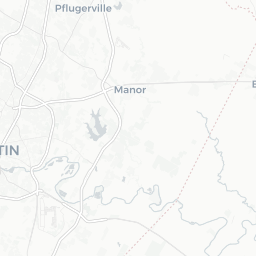





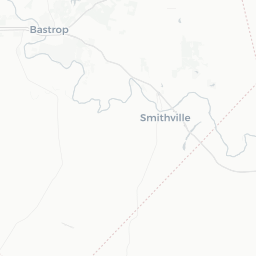
Location relative to bars and nightlife is the most underanalyzed advantage in Austin's taco economy. A truck parked outside a bar at midnight accesses a hungry, spending, less price-sensitive customer base — and the social context of tacos after drinks creates the memory associations that drive return visits.
The result is a two-shift operation: daytime neighborhood traffic plus late-night bar traffic, from a single location. For a small business owner, proximity to a bar on a Friday night is worth more than any Instagram campaign.
Field Note — Observed, South Congress
"I watched a very intoxicated man leave the bar that shares a parking lot with La Casita del Pastor and stumble his way to the truck. He could barely speak. He still demolished six tacos — an easy $30 bill, right there."
The bar proximity strategy, in one customer.
4 of the top 10 use the strategy
Tacos Las Amazonas #1
South Congress bar corridor — open until 3 AM on weekends
Feliz Mango Taqueria
The Concourse Project on weekends — a late-night venue
La Casita del Pastor
South Congress — open until 1 AM on weekends
Taqueria De Diez
Literally behind a downtown bar — until 1 AM Thu–Sat
Finding One
The Salsa & Tortilla Multiplier
The data supports the hypothesis. Every spot scoring 9.0 or above has at least one of: housemade salsa scoring 9.0+, a handmade tortilla at 8.5+, or a specialty slow-cooked protein. Every spot scoring below 8.0 lacks both housemade salsa and handmade tortillas.
Housemade salsa requires daily preparation and fresh ingredients — it reflects the cook's palate and cannot be bought in bulk. Handmade tortillas are pressed fresh daily and hold fillings differently, absorb salsa differently. They change the entire taco. The multiplier effect is real, and the data proves it.
Every spot ≥ 9.0 has
- + Housemade salsa (9.0+)
- + Handmade tortilla (8.5+)
- + Slow-cooked specialty protein
Every spot < 8.0 lacks
- × Housemade salsa
- × Handmade tortillas
- × Both. Without exception.
Top 5 salsa scores — all five spots rank in the top 10
Note
"Housemade salsa cannot be bought in bulk or standardized. It is the clearest signal of a kitchen that still cooks."
Finding Two
The Authenticity Gap
Paid promotion doesn't create fake reviews — it creates a cycle: visibility creates volume, volume creates reviews, reviews create more visibility. A feedback loop disconnected from food quality, systematically disadvantaging the family truck that can't afford to play.
Exhibit A — The Hyped
Veracruz All Natural
Rachael Ray endorsed · national press · multiple locations
Largest gap in the study
Exhibit B — The Trap
Taco Haus
4.7 Google rating · Westin food court foot traffic
Nearly a 3-point gap. Algorithmic mediocrity.
Exhibit C — The Real No. 1
Feliz Mango Taqueria
29 Yelp reviews · an obscure truck · zero marketing
The best taco in Austin is the hardest to find online.
Finding Three
The Real Value Equation
$3.50–$7
Per taco, everywhere on the approved list
La Casita del Pastor sells three tacos for $10. Oye Taquito 956 sells six mini tacos as a combo. Taquito Aviles serves the city's best menudo at an accessible price. Meanwhile the trendier spots charge $8 and up per taco — a full meal for two approaching $50.
The most authentic spots are almost always the most affordable. No publicists, no Instagram managers, no expensive dining rooms — every dollar goes into the food.
Conclusion
The Pranjal Approved Standard
Housemade salsa with real complexity and character.
Fresh tortillas — corn or flour — made with care.
Meat that tastes like someone cared about the marinade.
Every spot scoring 8.5 or above meets all three requirements. Spots that don't — regardless of online stars — don't make the list. Austin's extraordinary tacos are made by families and immigrants who learned from grandmothers in Jalisco, Veracruz, Matamoros, and Guanajuato.
Find them. Tell your friends. Leave reviews. Tip well.
About the Author
Pranjal Katare
Recent graduate of The University of Texas at Austin, Econometrics & Quantitative Economics. This research is the analytical foundation of Pranjal's Taco Spots — a platform dedicated to promoting authentic, locally owned taquerias across Austin and beyond.